
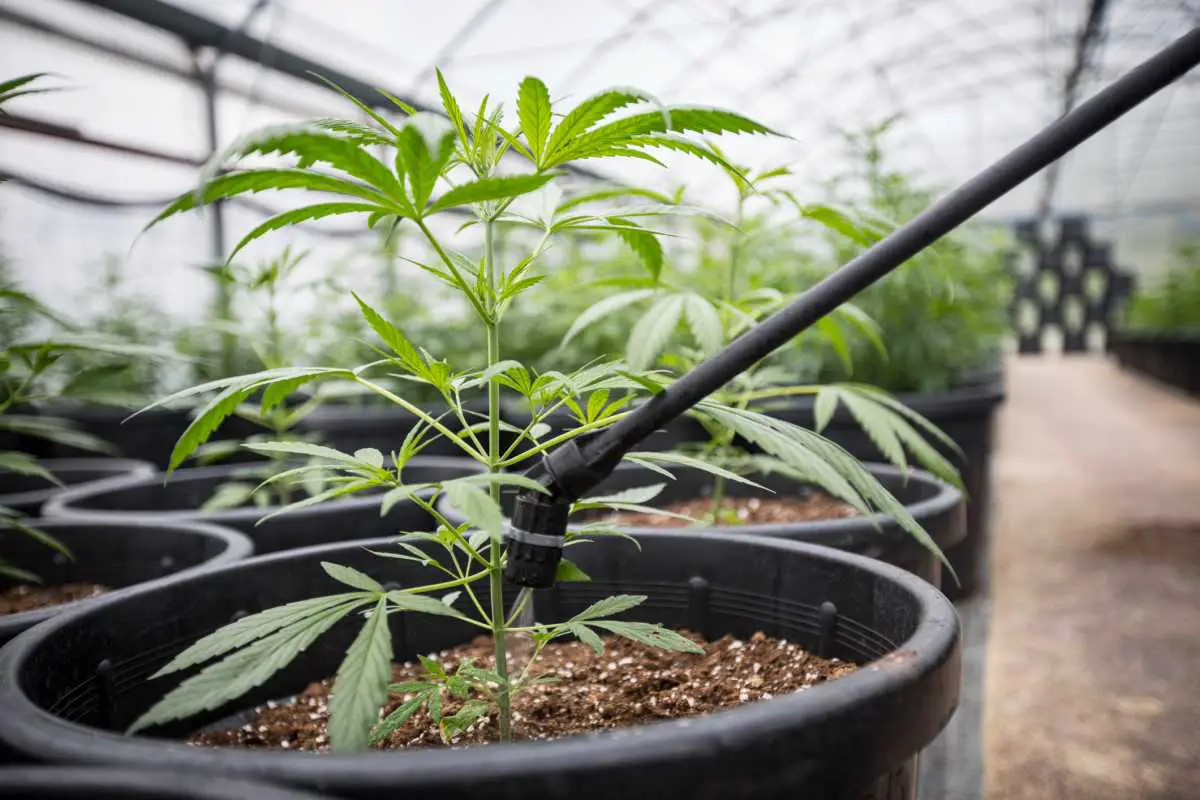
Quick Answer: Top dressing means spreading dry organic amendments on the soil surface around your cannabis plant’s base, then watering them in. Each watering carries nutrients slowly down to the root zone. Apply every 2 to 4 weeks depending on stage: nitrogen-heavy amendments in veg, phosphorus and potassium-heavy amendments in flower. Never top dress within 2 to 3 weeks of harvest.
The first time I switched from bottled nutrients to top dressing, I expected a dramatic result. What I got instead was something more valuable: consistency. The plants stopped swinging between overfed and underfed. Deficiencies that used to appear around week five of flower simply stopped showing up. The soil stayed alive and active right through harvest. And cleanup was easier because the medium was richer after the grow than before it.
By top dressing with compost, worm castings, kelp meal, and other organic amendments, you feed your plants while supporting the growth of beneficial microbes in the soil. That dual function is what makes top dressing different from liquid feeding. You are not just feeding the plant. You are building the soil ecosystem that feeds the plant for you.
This guide covers every amendment worth using, exact application rates, a stage-by-stage schedule, and the common mistakes that undermine the whole approach.
Disclosure: WeedMania420 participates in the Amazon Associates Program and the ILGM affiliate programme. Purchases through our links may earn us a small commission at no extra cost to you. We only recommend products we have genuinely researched and believe in.
Table of Contents
What Top Dressing Actually Is
Top dressing is an age-old agricultural practice that involves adding a layer of organic or inorganic material to the top of the soil. In cannabis cultivation specifically, it means applying dry organic amendments to the soil surface, leaving them undisturbed, and letting each watering gradually carry the nutrients down into the root zone.
The amendment is sprinkled directly on top of the soil and then gently worked into the upper layer. As you water your plants, the nutrients from the amendment are slowly washed down into the root zone, providing a gradual and consistent nutrient supply.
The fundamental difference from bottled liquid nutrients is the speed of release. Unlike synthetic fertilizers that can release nutrients too quickly and cause nutrient burn, organic amendments tend to break down gradually, providing a continuous supply of essential nutrients.
When you burns plants with liquid nutrients, it is almost always because they fed too much too fast. Top dressing makes overfeeding structurally difficult because the nutrient release rate is governed by microbial activity in the soil, not by how much you poured in.
Why Top Dressing Works Better Than Liquid Feeding for Organic Grows
Synthetic fertilizers are great at supplying plants with an immediate dose of nutrients because they contain mineral salts that rapidly dissolve in water. As a result, plants can absorb these nutrients much faster than they can uptake organic inputs. This sounds great, but over time, mineral salts might cause more harm than good.
Salt accumulation in the root zone is the hidden cost of long-term liquid synthetic feeding. Each application leaves behind a small residue of mineral salts. Over weeks and months these accumulate, raising the effective EC of the growing medium and eventually reaching concentrations that inhibit root function regardless of how accurately you feed.
Dry amendments are often more affordable than bottled nutrients, organic nutrients are absorbed slowly preventing overfertilization, and beneficial microbes require organic matter to thrive.
The microbial population in living soil is what converts raw amendments into plant-available nutrition. A living soil ecosystem fed through top dressing becomes more productive over time, not less. A synthetic salt-fed medium becomes progressively more depleted of the biology that makes organic growing work.
The benefits of frequently adding a layer every 7 to 14 days of organic substrate is that the plants will remain healthy, grow with a lush green vibrancy and not go short of nutrients resulting in deficiencies. Another benefit is the roots will begin to grow upwards through the new top layer as it slowly builds up over time, meaning the final root mass will be greater than without top dressing.
That point about upward root growth is one the community consistently undervalues. Roots following fresh organic material toward the surface expand the plant’s total absorptive surface area throughout the grow, which directly translates to larger yields from the same container.
The Best Amendments for Top Dressing Cannabis
Worm Castings
Worm castings are the safest, most beginner-friendly top dress amendment available. Worms convert waste into nutrient-rich droppings, providing an excellent source of essential minerals for plants. The NPK of worm castings is low (around 1-0-0 to 2-2-2 depending on the worm’s diet) but the microbial density is extraordinarily high. A tablespoon of quality worm castings contains more beneficial microorganisms than several litres of compost.
Worm castings are essentially impossible to overapply. You can use them at every top dress without risk of burn, which makes them the foundation of any organic top dressing programme. Apply 1 to 2 inches as a surface layer and water in.
When to apply: Throughout veg and flower. Safe at any stage.
Application rate: 1 to 2 inches of surface layer, every 2 to 3 weeks.
👉 Check current price on Amazon.
Compost
Homemade compost is an economical, nutrient-rich option, full of organic matter that feeds plants and microbes. Quality compost adds a broad-spectrum nutrient foundation alongside the biology to process it. Unlike worm castings which are finished and immediately available, compost still contains partially broken-down material that continues to decompose in the pot, releasing nutrients progressively over weeks.
Good quality compost has a rich, earthy smell. If it smells like anything other than fresh earth, it is either not finished or has gone anaerobic, neither of which belongs in a cannabis container. The most important thing to understand about organic gardening is that you’re feeding microbes. If the compost smells good, the microbes are healthy.
When to apply: Veg and early flower. Avoid applying heavy compost dressings in the final 4 weeks.
Application rate: Half-inch to 1-inch layer, every 3 to 4 weeks.
Kelp Meal
Made from nutrient-dense seaweed, kelp meal supplies a broad range of minerals and promotes cannabis soil microorganism growth. Beyond its NPK profile (roughly 1-0.1-2), kelp meal provides over 60 trace minerals and naturally occurring plant hormones including cytokinins and auxins, which support cell division and root development.
Alfalfa meal is also a good choice for compost teas, as it helps enhance microbial activity, which contributes to healthier roots and stronger plants. Kelp functions similarly, making it one of the most well-rounded single amendments in the organic grower’s toolkit.
When to apply: Throughout veg. Reduce in flower as it adds nitrogen.
Application rate: 1 tablespoon per gallon of soil capacity, every 3 to 4 weeks.
👉 Check current price on Amazon.
Blood Meal
Blood meal is derived from cattle and is high in essential minerals such as nitrogen. With an NPK of approximately 12-0-0, blood meal is the most concentrated nitrogen source in the organic amendment toolkit. It breaks down relatively quickly compared to bone meal, typically releasing most of its nitrogen over 2 to 6 weeks depending on moisture and microbial activity.
Use blood meal in early to mid veg when the plant is building its canopy rapidly and nitrogen demand is highest. Stop applying it once you see the first signs of pre-flowers. Nitrogen in flower suppresses bud development and can cause plants to stay in vegetative mode longer than intended, particularly with photoperiod strains.
When to apply: Veg only. Stop 2 weeks before the light flip.
Application rate: Half tablespoon per gallon of soil, every 3 to 4 weeks.
Bone Meal
Bone meal brings the phosphorus that blood meal lacks. With an NPK of approximately 3-15-0, it is the standard organic phosphorus source for top dressing in flower. Phosphorus drives bud formation, energy transfer within the plant, and root development in early veg.
Bone meal breaks down slowly, releasing phosphorus over 4 to 8 weeks. Apply it at the flip to 12/12 and it will be actively releasing phosphorus through peak bud development 3 to 6 weeks later. Top dressing is particularly useful during the flowering phase when cannabis plants need a boost of phosphorus and potassium to support bud development.
When to apply: At the light flip and again 3 to 4 weeks into flower.
Application rate: 1 tablespoon per gallon of soil, every 4 to 6 weeks.
👉 Check current price on Amazon.
Fish Meal
Fish meal is awesome for cannabis cultivation because it helps stimulate microbial populations in your soil and containers. Fish meal is an excellent organic amendment for its high nitrogen, and it will release the nitrogen slowly and can last for a few harvests because it will break down so slowly.
The slow-release nitrogen from fish meal is more forgiving than blood meal in veg, making it a better choice for growers who want to top dress less frequently. The microbial stimulation is also directly valuable: a more active soil biology converts all your other amendments more efficiently.
Fish meal is also an excellent top dressing for your cannabis containers during the vegetative period of growth. Growers can stop adding it as a top dressing once they switch to a 12/12 lighting schedule.
When to apply: Throughout veg. Stop at the light flip.
Application rate: 3 to 4 tablespoons per gallon of soil, every 4 to 5 weeks.
Langbeinite (Sul-Po-Mag)
This amendment is particularly useful in flowering cannabis plants. Langbeinite is considered potash, which means it has a good organic supply of potassium, a very important plant nutrient for growing big cannabis buds. Use about one tablespoon of Langbeinite per gallon of organic soil and mix it in well. You can also use it as a top dressing on top of the soil during the flowering period.
Langbeinite (0-0-22) also supplies magnesium and sulphur alongside its potassium content, making it a particularly efficient single amendment for mid-to-late flower when all three nutrients support bud density and resin production.
When to apply: Mid flower onward. Pairs well with bone meal at the flip.
Application rate: 1 tablespoon per gallon of soil, every 4 to 5 weeks in flower.
How to Top Dress: Step by Step
Step 1: Choose the Right Amendment for the Stage
Nitrogen-heavy amendments in veg (blood meal, fish meal, worm castings, kelp meal). Phosphorus and potassium-heavy amendments in flower (bone meal, langbeinite, worm castings). Worm castings and compost are neutral enough to use throughout.
Step 2: Water Your Plants Before Applying
Apply amendments to a moist surface, not dry soil. Dry soil causes amendments to sit on top rather than begin breaking down. A light watering the day before application primes the microbial activity that will begin processing the amendment once it is applied.
Step 3: Measure Your Amendments
Work by weight or volume based on the pot size, not by eye. Most application rates are expressed per gallon of soil volume. A 5-gallon pot receives 5 times the per-gallon rate. Overestimating is the most common error in organic top dressing, particularly with high-nitrogen amendments like blood meal.
Step 4: Apply Evenly Around the Drip Line
Sprinkle the amendment directly on top of the soil and then gently work it into the upper layer. Concentrate the application around the drip line (the outer edge of the canopy), not directly at the stem. The most active root tips are at the drip line, not at the base of the stem. Working into the top centimetre with a fork or your fingers is enough. You do not need to dig deep.
Step 5: Water In Thoroughly
Water the full pot volume after applying. A thorough watering carries dissolved nutrients and microbial activity downward from the amendment layer into the main root zone. A light sprinkle only wets the surface and leaves the amendment sitting dry where it cannot break down efficiently.
Step 6: Wait and Observe
Allow 5 to 10 days before assessing the plant’s response. Organic amendments are not instant. Expecting a visible response in 48 hours leads to premature re-application and eventual overfeeding. Yellowing leaves that appear 5 to 7 days after application are still responding to pre-amendment conditions, not to the fresh dress.
Top Dressing Schedule by Growth Stage
| Stage | Amendment | Rate per gallon | Frequency |
| Early veg (wk 1-3) | Worm castings | 1-inch layer | Every 3 weeks |
| Mid veg (wk 3-6) | Kelp meal + worm castings | 1 tbsp + 1 inch | Every 3 weeks |
| Late veg (wk 6-8) | Fish meal + kelp meal | 3 tbsp + 1 tbsp | Once, 2 wks before flip |
| Flip to 12/12 | Bone meal + worm castings | 1 tbsp + 1 inch | At flip |
| Early flower (wk 1-4) | Bone meal + langbeinite | 1 tbsp + 1 tbsp | Every 4 weeks |
| Mid flower (wk 4-6) | Langbeinite + worm castings | 1 tbsp + 1 inch | Once |
| Late flower (wk 6-harvest) | Worm castings only | 1 inch | Final dress only |
| Final 2-3 weeks | Nothing | Water only | Flush period |
Common Mistakes That Undermine Top Dressing
Applying nitrogen amendments in flower. Blood meal and fish meal in flower push nitrogen into a plant that is trying to produce buds, not leaves. Excess nitrogen in flower delays bud set, keeps plants locked in vegetative growth patterns, and reduces final density. Stop all nitrogen amendments at the light flip.
Applying to dry soil. Dry soil has reduced microbial activity. An amendment applied to dry soil will sit on the surface without breaking down, and the first heavy watering may push it off the edge of the pot entirely. Moist soil is the baseline requirement for any top dress application.
Expecting fast results. The biggest mismatch of expectations in organic growing is timeline. A synthetic nutrient correction takes 24 to 48 hours to show results. An organic top dress correction takes 5 to 14 days as the amendment breaks down, microbes convert it, and roots take it up. Apply and wait. Applying again before the first dress has had time to work compounds into overfeeding.
Top dressing too close to harvest. Any amendment applied within 2 to 3 weeks of harvest will not fully break down before the plant is cut. It adds material that was never used and potentially affects the taste of the final product. Switch to plain water-only in the final 2 to 3 weeks regardless of what the plant looks like. See the autoflower nutrient guide for stage-by-stage feeding guidance that aligns with this timeline.
Not accounting for what is already in the soil. If your base soil is a rich mix like Fox Farm Ocean Forest with 4 to 6 weeks of pre-loaded nutrients, you do not need to top dress in the first 3 to 4 weeks at all. Read your plants. Yellow lower leaves in late veg are the signal to begin. Green, healthy growth means the base soil is still providing.
Top Dressing vs Liquid Feeding: Do You Have to Choose?
Not necessarily. Many experienced organic growers run a hybrid approach: liquid feeds for precision corrections when a specific deficiency appears, with top dressing as the baseline nutrient programme between feeds. The liquid feed handles acute problems fast. The top dress handles the ongoing nutrition slowly.
The combination that works best in practice: a living soil mix with pre-loaded amendments, regular top dressing on the schedule above, and liquid CalMag as the only bottled input for calcium and magnesium corrections if the soil shows deficiency signs. That setup eliminates most of the complexity of a full liquid nutrient programme while still giving you the ability to respond quickly to plant signals.
The Seeds Worth Growing Organically
Organic feeding through top dressing rewards genetics with long veg periods and high terpene potential. These strains from ILGM are well-suited to organic soil builds and top dressing programmes:
OG Kush — responds strongly to bone meal and langbeinite in flower, producing the dense, resinous buds the genetics are known for.
White Widow — a classic organic grow strain with high terpene expression when soil biology is healthy throughout the grow.
Blue Dream — benefits from the extended veg feeding window that a fish meal and kelp programme supports across a 6 to 8 week veg period in a 4×4 tent.
FAQ
Can I top dress autoflowers? Yes, but with more caution than photoperiods. Autoflowers have a compressed lifecycle that leaves less time to recover from overfeeding. Use worm castings and kelp meal only in veg, and switch to bone meal plus worm castings at the first signs of pre-flowers. Avoid high-nitrogen amendments entirely. See the autoflower nutrient guide for the full timeline.
How long does a top dress take to work? Between 5 and 14 days depending on moisture levels, soil temperature, and microbial activity. Warmer soil with active biology processes amendments faster. If the soil runs below 60°F, breakdown slows significantly. A seedling heat mat under the pot during colder months maintains microbial activity at productive temperatures.
Can I top dress in fabric pots? Yes. Fabric pots are actually ideal for organic top dressing because the breathable walls support aerobic microbial populations throughout the medium. Apply the same way as any container. The slightly faster drying of fabric pots means you may need to water more frequently to keep the amendment zone moist enough for decomposition.
What is the difference between top dressing and amending soil? Amending means mixing dry amendments into the soil before planting. Top dressing means applying amendments to the surface of existing soil during the grow. Both methods use the same materials. Amending builds the base nutrition. Top dressing replenishes nutrients as the plant consumes them throughout the grow cycle.
Do I need to pH-adjust water when top dressing? Yes. pH still matters in an organic soil because nutrient availability at the root zone is still pH-dependent. Target 6.2 to 6.8 for soil. See the cannabis pH guide for the full range by medium and how to test your runoff accurately.